










June 2026 5 MIN READ
How to Measure Your Bra Size at Home
In this guide, we’ll take you through a step-by-step guide for how to measure your bra size at home. It’s so easy, you’ll regret not having done it sooner!
Knowing how to measure your bra size at home can make investing in new lingerie sets so much easier. Use this guide as an at-home starting point, then join us in store for an expert eye-led fitting.
Our expert bra-fitters can be found in every store and are trained to identify what styles and shapes will work best for your bust so you can feel comfortable and confident, and leave the back pain behind!
Whilst we always encourage booking an in store bra fitting experience to benefit from our fitters’ expertise, this bra measuring guide is here to help you find your perfect fit at home.
Once you’ve got your bra size, use our bra fit guide and bra sister size explainer, to help ensure your size works for you.
Bra Measuring Guide: What You’ll Need
To measure your bra size at home, you will need:
- A soft tape measure (or alternatively, use something like a piece of string or ribbon, that you can then measure against a ruler)
- A mirror
- Something to note down the measurements you make
We advise going braless for the most accurate measuring, but you could also wear a thin, non-padded bra, that will best mimic your natural shape and size.
Step One: Take Your Bra Underband Measurement
Fastenings: When choosing wedding pyjamas, it’s important to consider styles with buttons or tie fronts, rather than overhead tops. This will make getting dressed easier, without ruining hair or makeup
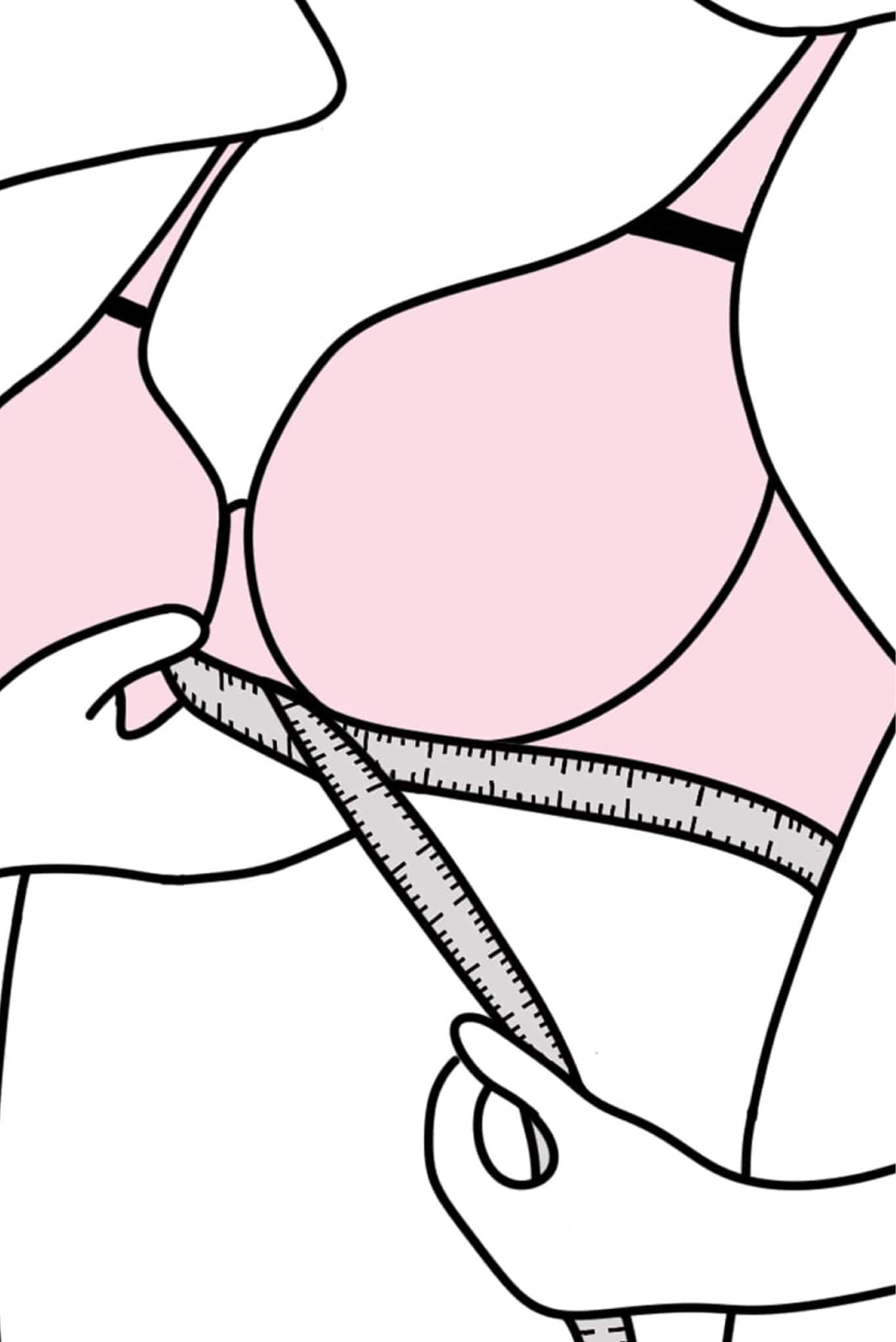
The first step to finding your bra size at home is to take your underband measurement.
The underband is the piece of fabric that runs around the back of the bra. This is the primary mode of support on your bra, and a good fitting underband should sit horizontally across your back, snug but still comfortable.
To measure your underband, take the measuring tape and wrap it around your ribs, directly under your bust, where the bra underband would sit. Keep the tape level and snug as you wrap it around your back, but be careful not to pull it too tight - you want your bra to fit comfortably after all.
- Take your measurement in inches, rounding up to the nearest whole number.
- If the number you get is odd, round it up to the nearest even number.
This is your underband measurement.
If you have measured in CM rather than inches, you can use the conversion chart below to work out your band size.
Bra Band Size Conversion Chart
If your underband is digging in and feeling too tight, this means that the underband size is too small for you and there is not enough fabric to offer the support you need. If you can’t adjust the hook and eyes to give you more room, try a bra with a bigger band size.
If the underband is riding up or feels loose, this means the underband size is too big for you and you are not getting the correct support you need. If you can’t tighten the underband with the hook and eyes, try a bra with a smaller band size.
Step Two: How to Measure Your Bust
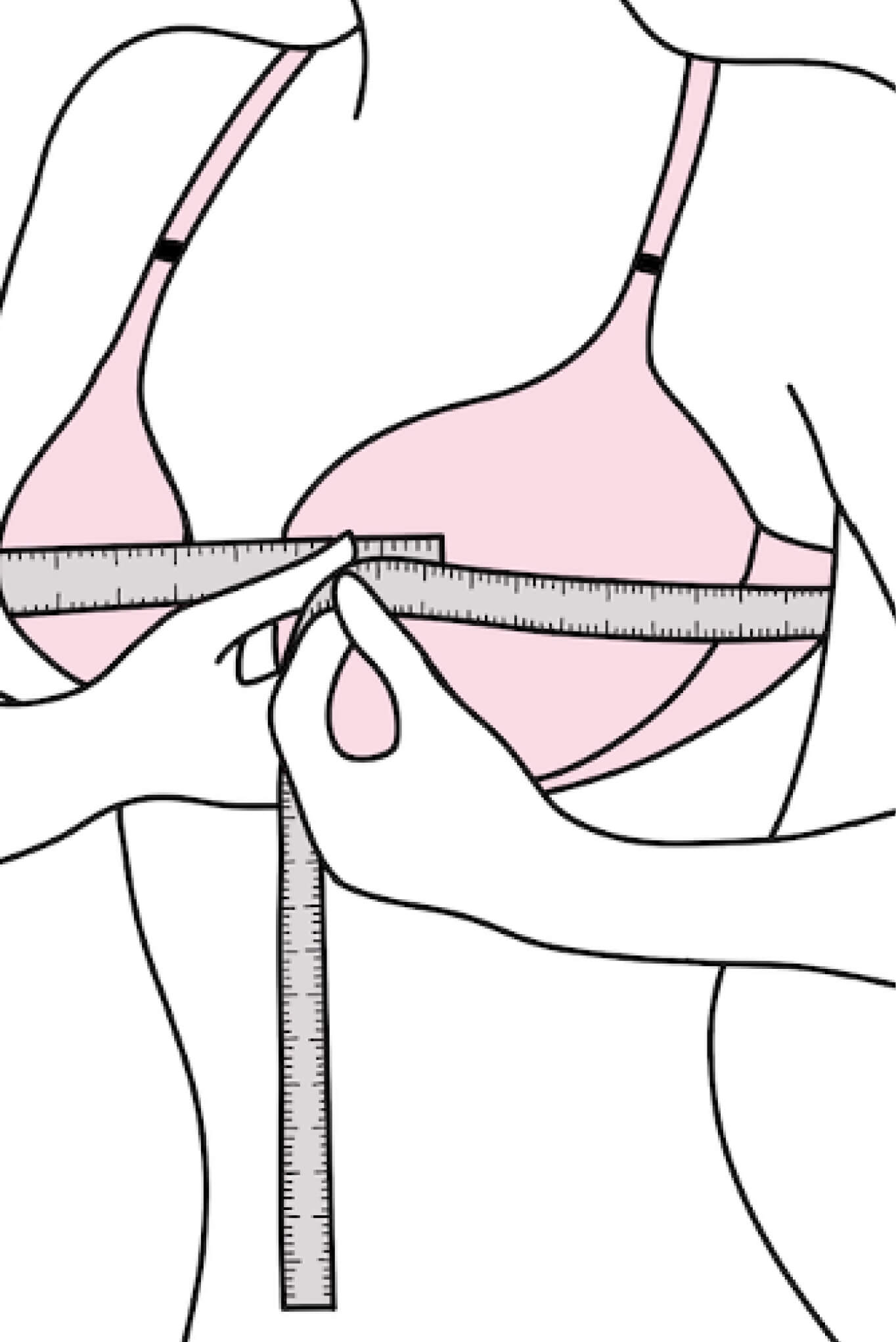
The next step is to take the measurement of your bust. This will help you work out your cup size.
To measure your bust, wrap the measuring tape around the fullest part of your bust, which will likely be in line with your nipples.
Keep the tape relaxed - you don’t want to squash or compress your natural shape. Bust fullness varies naturally, and this measurement is about shape, not forcing a number. Trying to manipulate this measurement can lead to an incorrect size, and in turn, an uncomfortable bra.
Take the measurement in inches and round it to the nearest whole number.
Step Three: How to Work Out Your Cup Size
Now that you have your underband and bust measurements, it's time to work out your cup size. This is where your two measurements come together.
To work out your cup size, simply subtract your band measurement from your bust measurement:
Bust Size - Band Size = Cup Size
For example: 39 inches (Bust Size) - 34 inches (Band Size) = 5 inches difference (= DD Cup Size)
Use the table below to work out your cup size, using the ‘difference’ figure you get.
Cup Size Conversion Chart
It’s important to note that your cup size is not fixed - it is relative to your underband size. For example, a D cup doesn’t mean the same thing across all band sizes. A 32D and a 38D are completely different in volume.
Now that you have your bra size, it’s time to start trying some new bras on. Explore the best bras for small busts and the best bras for large busts for even more help in finding your new perfect bra.
Bra size Calculators and Size Charts: What They Can and Can’t Tell You
A Bra Size Calculator works similarly to a chart, taking your band size and bust size measurements and calculating the difference to assign you a cup size.
However, calculators and charts can only go so far. They don’t consider breast shape and they don’t take into account different bra styles or materials.
At Boux Avenue, our bra fitting experiences go beyond tape measurers and numbers. This is a tailor made service, in which our experts will find you the best bra, based on these 4 Factors:
Bust shape - bust shapes vary in size, density, shape and position on your chest.
Bra style - from plunge styles to balconettes, there are many different styles, and our bra-fitters can identify what will offer the best support and look for you.
Material - the fabric used in the bra will affect how the bra fits.
Customer preference - while our bra-fitters are trained to advise and educate on the best fit, feel, and look from a bra, we know how important personal preference is, and want to hear what you want from your bra. A calculator won’t do that!
Physically trying on a bra is a completely different experience to basing your size off a chart, which is why we always recommend using this guide as a starting point.

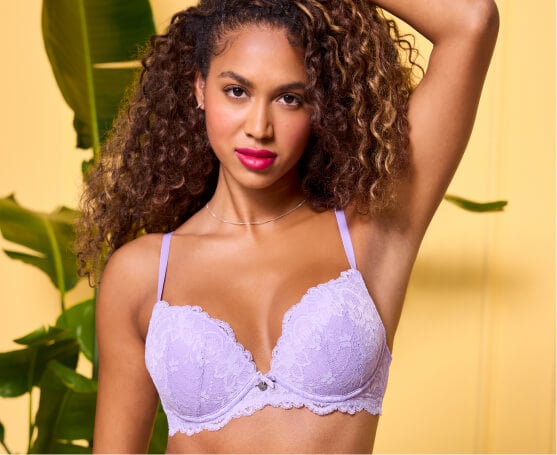
How Bra Sizes Really Work (And Why Fit Matters More Than Numbers)
If you’ve ever felt confused trying to understand how bra sizes work, you’re not alone! A bra size consists of two parts: the band size (the number) and the cup size (the letter).
The band is the foundation of the bra and provides around 80% of support. The cup size represents the volume of your bust in relation to your underband size - it’s not a fixed size. This is a common misconception when people try to figure out their bra size
For example a 32D, a 34D and a 38D are all completely different in terms of volume. As the band size increases, the cup volume increases too - even if the letter stays the same.
Ultimately, the “right” size isn't just about the number and letter, it's about how the bra fits, feels, and supports your body. Comfort, confidence and support will always matter more than what’s on the label.
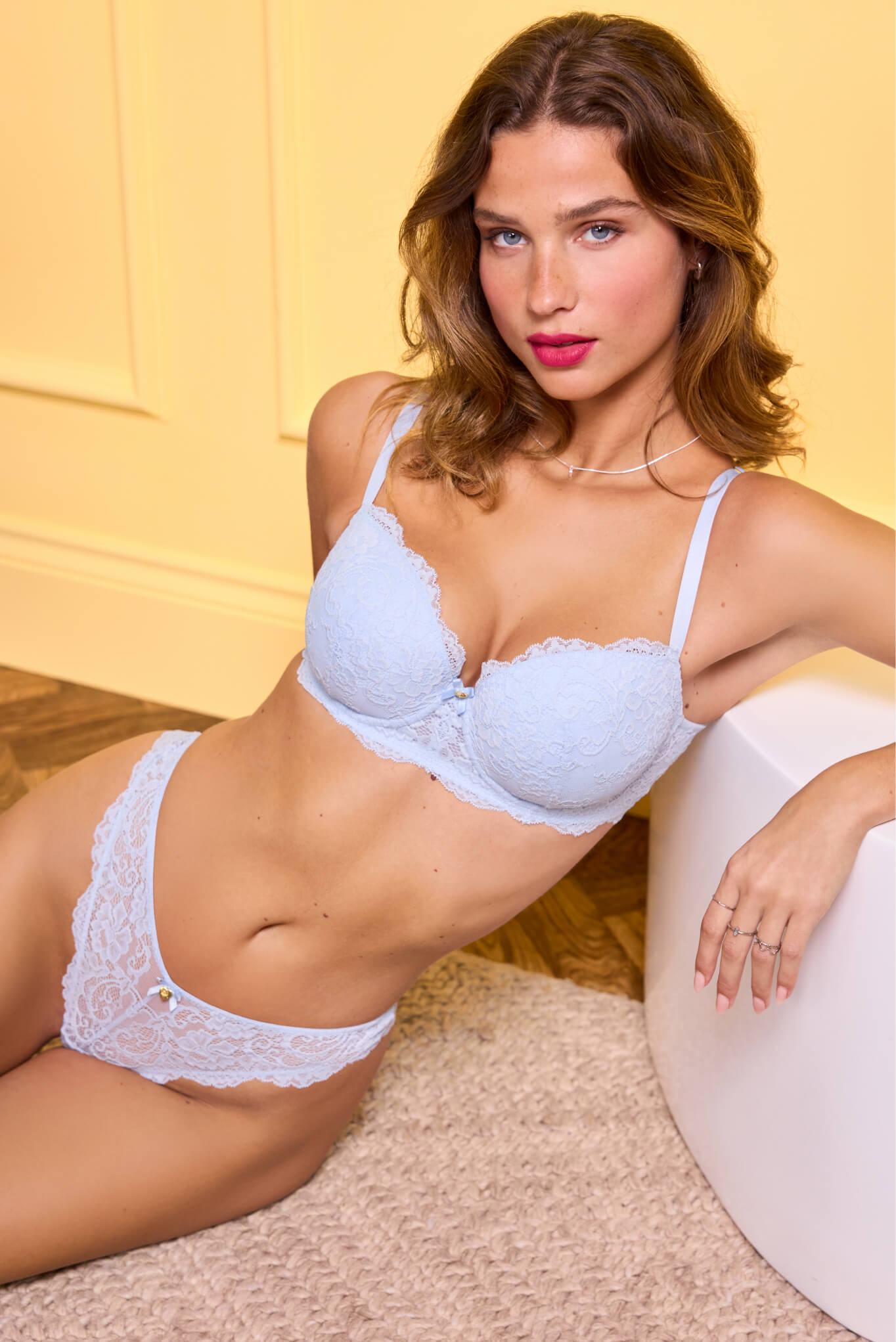
Bra Sister Sizes Explained: Finding Your Best Fit
Is your bra fit almost perfect? Understanding bra sister sizes can make all the difference.
Sister sizes are equivalent sizes with the same cup volume, but different underband sizes.
- If you’re going up a size for the underband, go down on the cup size.
- If you’re going down on the underband size, go up on the cup size.
Different bra styles and materials might require different sizes due to the amount of give and stretch, this is another scenario where sister sizing can be really useful.
For a more detailed explanation, take a look at our Bra Sister Size guide.
To work out your cup size, simply subtract your band measurement from your bust measurement:
Bust Size - Band Size = Cup Size
For example: 39 inches (Bust Size) - 34 inches (Band Size) = 5 inches difference (= DD Cup Size)
Use the table below to work out your cup size, using the ‘difference’ figure you get.