


















August 20265 MIN READ
Bra Sister Sizes Explained: How to Find Your Perfect Fit
Your bra’s ‘sister size’ is a term you’ll read a lot, but are you one of the many who aren’t sure what it actually means? Sister sizes are an alternative bra size that you can try when you find your band size isn’t fitting quite right, or if your size is out of stock. If you’re shopping for a new bra or bralette, try the bra sister size chart below to adjust your fit.

What are Bra Sister Sizes?
Bra sister sizes are alternative sizes that share the same cup volume, even though the band size and cup letter are different. Sister sizes are proportional, so if you change your band size, you’ll need to adjust your cup size as well.
For example, if you are fitted in one of our stores as a 32C, then your sister sizes would be a 30D, or a 34B. These three sizes all have the same cup volume, so they will all fit very similarly. If you try the 30D, then your underband will fit slightly tighter, and your cup will be slightly bigger. If you try the 34B, then the underband will fit slightly looser, and your cup will be slightly smaller. But not to worry! As the cup volume is the same, your underband will still support you and the cups will still sit comfortably.

When Should You Use a Sister Size?
Knowing your bra size is a great starting point, but it doesn't always guarantee the perfect fit. Different bra styles, fabrics and brands can all fit slightly differently, even when the size on the label stays the same and that's where sister sizing can help!
Here are the four most common reasons to use a sister size:
Is your usual underband feeling too tight or too loose?
If you’re finding that your bra’s underband is causing discomfort, either by riding up and not giving you the correct support, or by digging in and feeling too tight, then this is a great opportunity to try a sister size. Remember that a new bra should feel comfortably snug on the loosest hook, giving you room to tighten it as the elasticity in the band naturally stretches with wear.
If your band feels too tight, leaves uncomfortable marks, or makes it difficult to breathe comfortably, try going up one band size and down one cup size. For example, if you usually wear a 34DD, try a 36D. If your band rides up your back, feels loose throughout the day, or you're constantly tightening the straps to compensate, try going down one band size and up one cup size. For example, if you wear a 34DD, try a 32E.
Our expert bra fitters are always on hand in store to help you find the right bra size - as well as helping you explore the option of sister sizes!
Is your go-to size out of stock?
There's nothing more frustrating than finding the bra you love only to discover your size has sold out. If your usual size isn't available, a sister size can often be a great alternative. Because the cup volume stays very similar, you'll still enjoy excellent support and comfort while giving yourself more options to choose from.
Just remember that sister sizing works best by moving one size up or down. Going multiple sizes away from your usual fit can start to affect comfort and support.
Do you want to try a different bra style?
Not all bras are designed to fit in exactly the same way. A plunge, balconette, unpadded, or push-up bra can all feel different because they're constructed for levels of support and outfit requirements. Extra padding, lower necklines or firmer materials can all change how your usual size feels.
For example, if you usually wear an unpadded bra but are trying a heavily padded push-up bra, you may find that your regular size feels a little snug in the cup. Trying a sister size can help you achieve a more comfortable fit without compromising on support. It's completely normal to wear different sizes across different bra styles - the most important thing is how the bra fits, not the number or letter on the label!
Is one cup bigger than the other, or are you between sizes?
Most people naturally have one breast that's slightly larger than the other, so it's very common to find that one cup fits perfectly while the other feels a little loose. If you're between cup sizes or your fit feels inconsistent, trying a sister size can help you find a more balanced, comfortable fit. As a general rule, fit your bra to your larger breast to avoid compression, then adjust the straps or use removable padding if needed to create symmetry.
Similarly, if your current bra feels like it's almost right, but not quite - a sister size can often provide the small adjustment needed to make it feel much more comfortable.

How To Find Your Sister Bra Size
If your bra size is measured as a 34DD, but you’re finding the underband is too tight, then switching to a 36DD won’t solve the problem, as this will make the band and cup size bigger. Instead, you’ll need to adjust your cup size in alignment with the band size, to maintain the correct cup volume. Similarly, if you’re measured as a 34DD but the band is too big and not giving you the correct level of support, then switching to a 32DD won’t help much either! You would need to try the 32E to maintain the correct cup volume.
The easiest way to remember is, if you go up a band size, you need to go down a cup size. Or if you go down a band size, you need to go up a cup size.
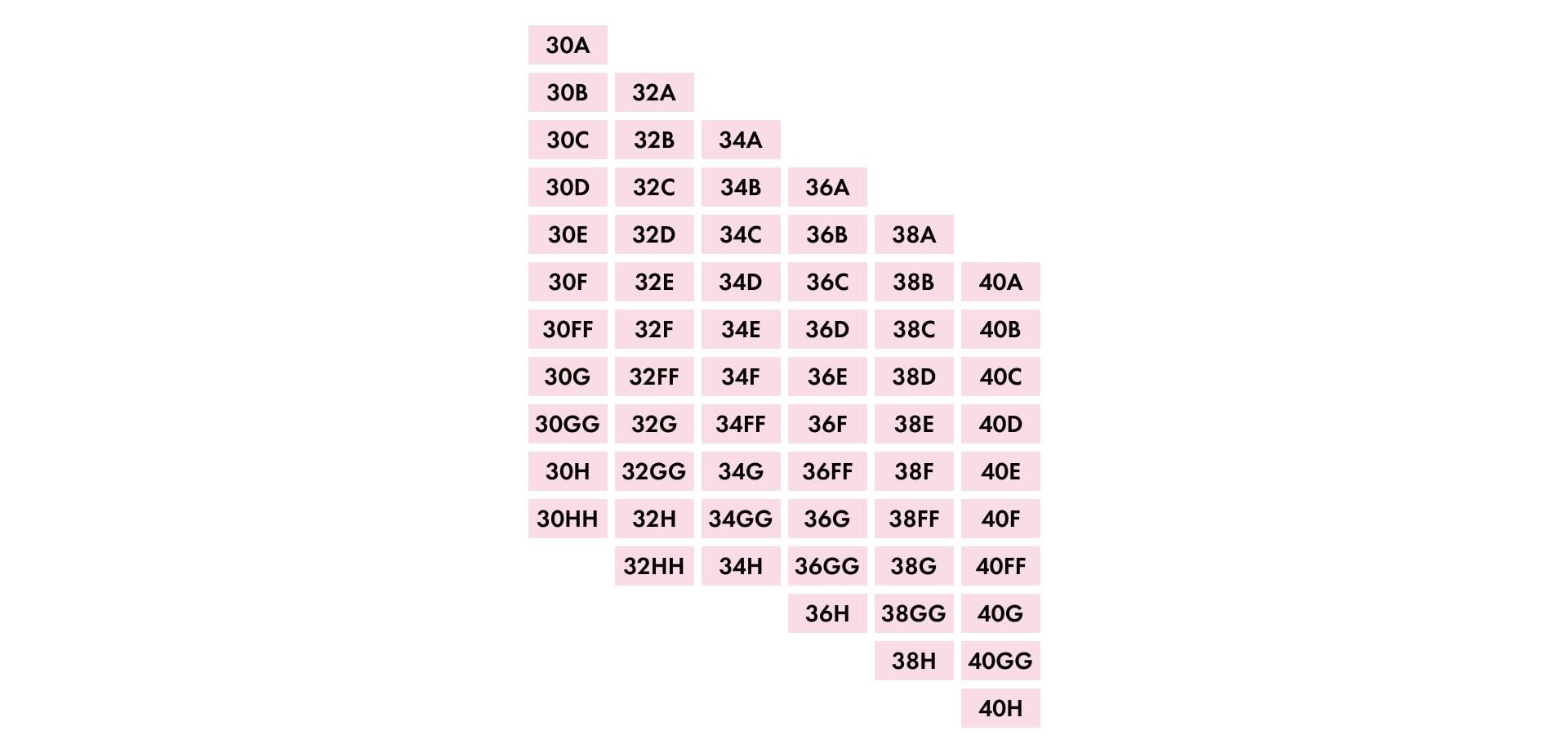
Try using the Bra Sister Size Chart below to find your correct sizing alternative!
Bra Sister Size Chart
To use the chart, find your current size. If you need to go smaller, then choose the size to the left. Need to go bigger? Then choose the size to the right of your original measurement.
Will a Sister Size Feel the Same?
When first trying your bra sister size, it may take a few wears to adapt. Even though the cup volume is identical, the underband will feel different. The underband of your bra offers 80% of the support, so the band fit really matters. Sizing down to the tighter band will offer more support than sizing up to the looser band. If you’re still unsure, talk to one of our expert bra fitters in store who will be more than happy to help you find the best fit for you.
Bra Sister Sizes FAQs

How do bra sister sizes work?
Bra sister sizes work by using the cup-to-band ratio. When you go up a band size, you go down one cup letter to keep the same cup volume. Likewise, when you go down one band size, you go up one cup letter. This means the fit around your body changes, while the cup capacity stays the same.

Is it better to sister size up, or down?
It depends on the fit issue that you’re experiencing. If the band feels too tight but the cups feel good, then try the band size up. If the band feels too loose but the cups fit well, then try the sister size down. If the band and the cups don’t feel supportive and comfortable, then book a free bra fitting with one of our in-store experts.

How do I know which size bra to wear?
The best starting point is to take accurate measurements, as this helps you find your correct bra size. Knowing how to measure bra size properly provides a reliable foundation, but it's also important to remember that your bra sizing can change over time due to factors such as weight fluctuations, hormonal changes, pregnancy or simply ageing. That's why it's a good idea to check your size regularly, ideally every 6 months to a year.